Introduction to Stem Cells and Stem Cells LA
Stem cells are the foundation of every tissue and organ in your body. What makes them unique is their remarkable ability to do two things: they can renew themselves through cell division, and they can develop into specialized cells with specific functions. Think of them as the human body’s raw materials—the cells from which all other cells with specialized roles are generated.
Understanding the different types of stem cells matters when you’re considering treatment options. Not all stem cells are the same, and the source and type of stem cell directly affects safety, ethical considerations, and what conditions a therapy can potentially address. This is why knowing the basics helps you ask the right questions and make informed decisions about your care.
Stem Cells LA is a regenerative medicine clinic in Los Angeles specializing in advanced stem cell injection therapy. We use ethically sourced mesenchymal stem cells derived from donor placental and umbilical cord tissue. Our treatments do not use embryonic or fetal-derived stem cells. Instead, we focus on the most trusted and research-backed cellular sources known for their natural ability to reduce inflammation, support tissue repair, and promote faster healing.

Quick Summary:
-
Stem cells can self-renew and differentiate into specialized cell types
-
Different stem cell types have different capabilities and clinical applications
-
Stem Cells LA uses donor MSCs from umbilical cord and placental tissue
-
We do not use embryonic or fetal stem cells in any treatment protocol
-
This article explains the main stem cell classifications and which types are actually used in modern injection therapies
Core Types of Stem Cells by “Potency” (How Many Cell Types They Can Become)
Scientists classify stem cells primarily by their “potency”—their capacity to differentiate into various cell types. This classification creates a spectrum from the most flexible cells capable of forming an entire organism down to highly specialized cells that produce only one mature cell type.
Understanding this hierarchy helps clarify why certain stem cells are used in research while others are practical for clinical applications. Not all categories are appropriate for therapeutic use; some exist only at the earliest stages of embryonic development, while others are the workhorses of adult tissue maintenance.
The Potency Spectrum:
-
Totipotent: Can form every cell type plus supporting tissues (placenta)—only exists at fertilization
-
Pluripotent: Can become almost any cell type in the adult body but not an entire organism
-
Multipotent: Can differentiate into several related cell types within a tissue family
-
Oligopotent: Can become a few closely related cell types
-
Unipotent: Self-renew but produce only one specific mature cell type
Totipotent Stem Cells
Totipotent stem cells represent the highest level of differentiation potential in the potency hierarchy. A totipotent cell can form every cell type required for a complete human being, including all embryonic tissues plus the placenta and other supporting structures needed for fetal development.
The primary example is the zygote—a fertilized egg that contains the complete genetic blueprint for an entire human. These cells exist only during the earliest stages of development, specifically during the initial cell divisions following fertilization (approximately days 1-4), before the embryo forms a blastocyst.
Key Points:
-
Totipotent cells can differentiate into any cell type for a complete organism
-
They exist only at the very earliest stage of human embryos
-
They are not harvested or used in clinical stem cell injections
-
Stem Cells LA does not use totipotent or embryonic stem cells for ethical and regulatory reasons
Pluripotent Stem Cells (Embryonic and iPSC)
Pluripotent stem cells can become almost any cell type in the human body—they can differentiate into cells from all three germ layers (ectoderm, mesoderm, endoderm). However, unlike totipotent cells, they cannot form a complete organism because they lack the ability to create placental tissues.
Two major sources of pluripotent cells exist. Human embryonic stem cells are derived from the inner cell mass of a blastocyst, an early-stage embryo created during in vitro fertilization. The first human ESC lines were developed in 1998, opening major advances in developmental biology. Induced pluripotent stem cells (iPSCs) represent a more recent innovation—adult cells that have been genetically reprogrammed to return to a pluripotent state, first achieved in 2006-2007.
While pluripotent stem cells iPSCs and ESCs offer tremendous research value for disease modeling, drug screening, and understanding human development, they face significant clinical challenges. Research has identified issues including low survival rates of transplanted cells and tumorigenicity (the potential to form tumors). These limitations currently restrict their direct therapeutic applications.
Research vs. Clinical Reality:
-
ESCs are primarily used in research settings and experimental therapies
-
iPSCs avoid embryo destruction and are valuable for modeling diseases in the lab
-
Both face safety challenges that limit current clinical applications
-
Stem Cells LA does not use embryonic or iPSC products in injection therapies
-
Our clinic focuses on more mature, multipotent MSCs with established safety profiles
Multipotent Stem Cells
Multipotent stem cells occupy a practical middle ground in the potency hierarchy. These cells can differentiate into several related cell types within a specific tissue “family” but cannot produce every cell type in the adult body. They serve as the body’s built-in repair system, replenishing damaged cells within their particular organ or tissue.
Two clinically important examples demonstrate the value of multipotent cells. Hematopoietic stem cells in bone marrow give rise to all blood cells—red blood cells, white blood cells, and platelets. Mesenchymal stem cells found in various adult tissues can differentiate into bone cells, cartilage cells, fat cells, and muscle cells.
Clinical Relevance:
-
Multipotent stem cells are the main type used in routine clinical applications today
-
Bone marrow transplants using HSCs have treated blood cancers since the 1960s
-
MSCs are the primary cell type used by Stem Cells LA for injectable regenerative therapies
-
These cells offer anti-inflammatory, immunomodulatory, and tissue-support properties
-
The following sections provide deeper detail on MSCs and their use in injections
Oligopotent and Unipotent Stem Cells
Oligopotent stem cells can differentiate into a few closely related cell types but are more restricted than multipotent cells. Examples include certain lymphoid or myeloid blood forming stem cells that develop into specific immune cell lineages.
Unipotent stem cells represent the most specialized category. Muscle stem cells (also called satellite cells), for instance, can self-renew but differentiate exclusively into muscle cells. Despite their limited differentiation potential, their self-renewal capacity distinguishes them from ordinary specialized cells.
Understanding the Limited Categories:
-
Oligopotent cells are important for specific tissue renewal (like certain blood stem cells)
-
Unipotent cells maintain single tissues—muscle satellite cells for skeletal muscle fibers
-
These types are vital for day-to-day tissue maintenance within specific organs
-
Most clinical stem cell therapies do not use purified oligopotent or unipotent populations
-
MSC-based treatments may influence these cells indirectly through signaling
Stem Cell Types by Source: Where They Come From
Beyond potency classification, stem cells are also categorized by their origin. This distinction matters because the source directly affects ethical considerations, collection methods, regulatory status, and clinical applications.
The three primary source categories are embryonic (from early human embryos), adult or tissue-specific (from postnatal tissues like bone marrow or fat tissue), and perinatal (from birth-associated tissues like umbilical cord and placenta). Each source carries different advantages and limitations for therapeutic use.
Source Categories Overview:
-
Embryonic: from blastocyst inner cell mass, raises ethical concerns
-
Adult/Tissue-Specific: from bone marrow, fat, and other tissues throughout the body
-
Perinatal: from umbilical cord blood, cord tissue, and placenta—ethically sourced from donated tissues
-
Stem Cells LA specifically uses perinatal MSCs from rigorously screened donors
Embryonic Stem Cells (ESCs)
Embryonic stem cells are pluripotent cells derived from the inner cell mass of a 4-5 day old human blastocyst. These embryos are typically created during in vitro fertilization procedures and donated for research with informed consent. The first human ESC lines were developed in 1998, marking a turning point in regenerative medicine research.
ESCs offer significant advantages for research. They can differentiate into virtually any cell type in the human body and can be expanded indefinitely in laboratory conditions. Researchers grow stem cells from these lines to study disease mechanisms, test drug candidates, and explore potential therapies for conditions ranging from diabetes to heart disease.
However, clinical applications face substantial barriers. Beyond the ethical controversy over embryo destruction, ESC transplants carry risks of tumor formation (teratomas) and face tight regulatory control in the United States and worldwide.
ESC Facts for Patients:
-
First derived in humans in 1998, primarily used for research
-
Broad differentiation potential makes them valuable for scientific study
-
Ethical controversy and tumor risk limit clinical applications
-
Tight regulatory oversight in the US
-
Stem Cells LA does not use embryonic stem cells in any treatment protocol
Adult (Tissue-Specific) Stem Cells
Adult stem cells (also called tissue specific stem cells or somatic stem cells) are found throughout the body in many organs. These cells serve as the body’s natural repair system, replacing cells lost through normal wear, injury, or disease. Unlike embryonic sources, they exist in your body right now, quietly maintaining your tissues.
Adult stem cells are typically multipotent or unipotent, producing cell types limited to their tissue of origin. Neural stem cells in specific regions of the brain can become neurons and other brain cells. Hematopoietic stem cells in adult bone marrow cells generate blood and immune cells. Stem cells in other tissues like skin, gut, and fat tissue similarly maintain their local environments.
The clinical example most people recognize is bone marrow transplants. Since the 1960s, doctors have used adult stem cell transplants to treat leukemias, lymphomas, and inherited blood disorders. Some regenerative clinics use a patient’s own adipose-derived or bone marrow-derived MSCs for therapy, though cell quality and counts can vary significantly with age and health status.
Adult Stem Cell Considerations:
-
Found in bone marrow, skin, gut, fat, muscle, brain, and other organs
-
Serve as the body’s built-in repair system for replacing cells lost to age and injury
-
Typically multipotent or unipotent, limited to their tissue family
-
Autologous (patient-derived) cells may have reduced quality in older or chronically ill patients
-
Stem Cells LA chooses screened donor-derived perinatal MSCs for consistency and potency
Perinatal Stem Cells (Umbilical Cord and Placenta)
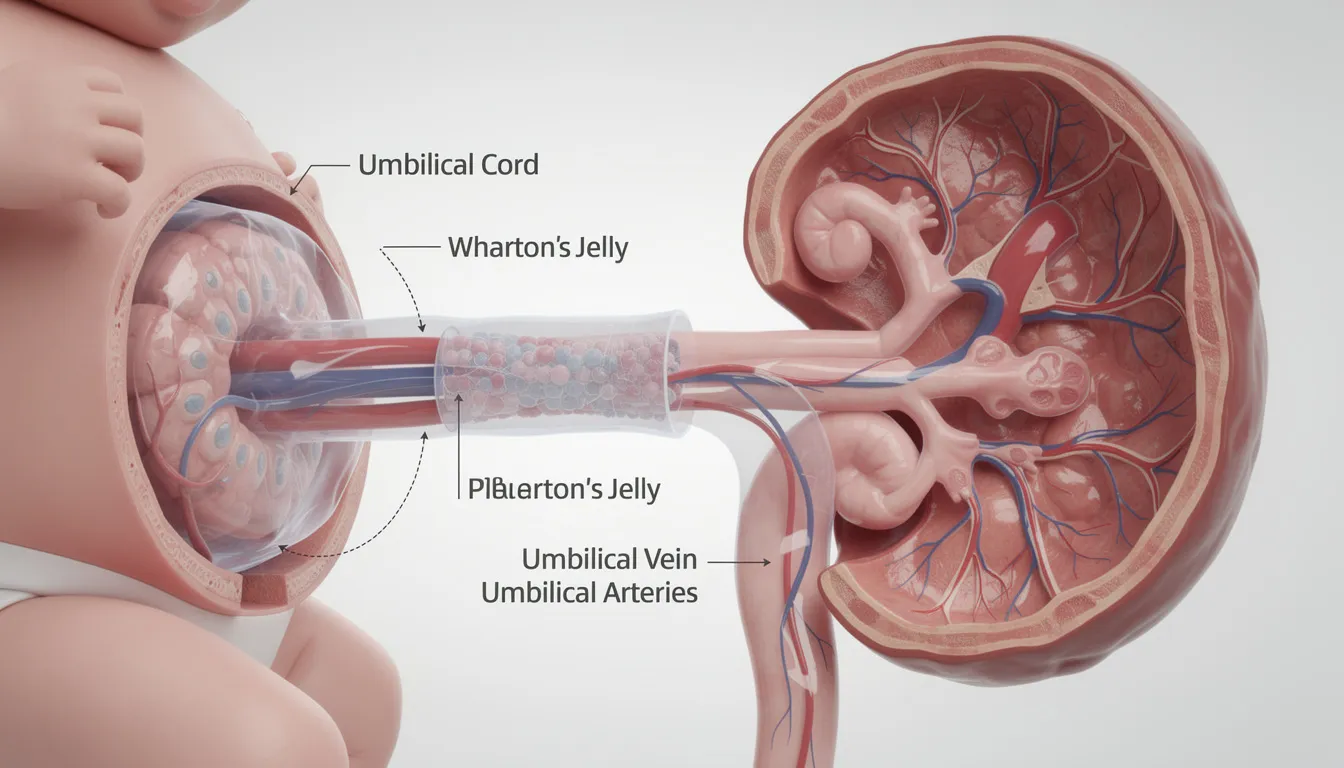
Perinatal stem cells come from tissues associated with birth: umbilical cord blood, umbilical cord tissue (specifically the Wharton’s jelly layer), and placenta. These tissues are normally discarded after healthy, full-term deliveries but represent a rich source of valuable stem cells when voluntarily donated under informed consent.
Umbilical cord blood contains three different kinds of stem cells: hematopoietic, mesenchymal, and embryonic-like stem cells. The cord tissue itself and placental tissue are particularly rich in mesenchymal stem cells with potent anti-inflammatory and immune-modulating properties. Research shows placental-derived cells can differentiate into a wide variety of tissue types including bone, cartilage, fat, muscle, liver, cardiac, pancreatic, pulmonary, and neurological tissues.
The collection and processing of donor perinatal MSCs follows rigorous standards. Tissues are obtained from screened, healthy donors after uncomplicated full-term deliveries. Processing occurs in FDA-compliant tissue banking facilities where cells undergo testing for sterility, cell identity markers, and viability before preparation for clinical use.
Why Perinatal Sources Stand Out:
-
Ethically non-controversial—tissues are voluntarily donated and would otherwise be discarded
-
Rich in MSCs with strong anti-inflammatory and immunomodulatory properties
-
Umbilical cord and placental tissues contain cells with broad differentiation capacity
-
Donor screening and lab testing ensure safety and consistency
-
Stem Cells LA’s injections use these ethically sourced donor MSCs, not embryonic or fetal cells
-
Processing follows FDA-compliant standards for human cellular and tissue-based products
Key Functional Stem Cell Types You’ll Hear About in Medicine
When researching regenerative medicine, you’ll encounter specific named stem cell types repeatedly. Each type lives in a different part of the human body and supports different tissues. Understanding these distinctions helps you evaluate treatment options and ask informed questions.
Hematopoietic Stem Cells (Blood-Forming Stem Cells)
Hematopoietic stem cells are multipotent blood stem cells residing primarily in bone marrow. Through a series of cell divisions and developmental changes, HSCs give rise to all blood and immune cells: red blood cells that carry oxygen, white blood cells that fight infection, platelets that enable clotting, and specialized immune cells including T-cells that regulate immune responses.
HSC transplantation represents one of the oldest and most established applications of stem cell therapy. Since the late 1960s, bone marrow transplants have successfully treated leukemia, lymphoma, and other blood disorders. Today, HSCs can be obtained from bone marrow, peripheral blood after stimulation with growth factors, or from umbilical cord blood.
HSC Therapy Context:
-
Generate all types of blood cells including red cells, white blood cells, and platelets
-
Established standard of care for many hematologic malignancies since the 1960s
-
Can be sourced from bone marrow, peripheral blood, or cord blood
-
Transplants are complex, hospital-based procedures requiring specialized care
-
Stem Cells LA does not perform hematopoietic stem cell transplants—we focus on MSC-based therapies for orthopedic and degenerative conditions
Neural Stem Cells
Neural stem cells reside in specific regions of the brain and spinal cord. These specialized stem cells can differentiate into neurons (nerve cells), astrocytes, and oligodendrocytes—the main cell types that make up nervous tissue. They play crucial roles in brain development and provide limited repair capacity in the adult brain.
Researchers heavily study neural stem cells for conditions like Parkinson’s disease, spinal cord injury, multiple sclerosis, and other neurodegenerative disorders. However, most neural stem cell applications remain in the research phase or early clinical trials, typically conducted at major academic medical centers rather than private clinics.
Neural Stem Cell Status:
-
Found in specific brain and spinal cord regions
-
Can become neurons, astrocytes, and oligodendrocytes
-
Heavily studied for neurological conditions but mostly in research/trial phases
-
Stem Cells LA does not inject neural stem cells
-
MSC-based therapies may support neurological health through systemic anti-inflammatory effects
Mesenchymal Stem Cells (MSCs): The Workhorse of Regenerative Therapy
Mesenchymal stem cells have emerged as the primary cell type for regenerative injection therapies worldwide. These multipotent stromal cells can differentiate into bone cells, cartilage cells, fat cells, and connective tissue. However, their main therapeutic value extends beyond differentiation—MSCs act as signaling centers that orchestrate tissue repair.
MSCs can be found in multiple locations: bone marrow, adipose (fat) tissue, umbilical cord tissue (particularly the Wharton’s jelly layer), and placenta. Stem Cells LA uses donor cord and placental MSCs because they offer consistency, high cell vitality, and avoid the need for harvesting procedures on the patient.
The therapeutic mechanism of MSCs involves releasing growth factors, cytokines, and exosomes that reduce inflammation, support injured tissues, modulate overactive immune responses, and improve local blood flow. This makes them relevant for a range of conditions beyond simple tissue replacement.

MSC Therapy at Stem Cells LA:
-
Can differentiate into bone, cartilage, fat, and connective tissue
-
Primary therapeutic value lies in signaling and immune-modulating abilities
-
Release factors that calm inflammation, support repair, and modulate immune responses
-
Studied for orthopedic injuries (knee osteoarthritis, tendon tears), chronic joint pain, and autoimmune conditions
-
Stem Cells LA specializes in carefully dosed, image-guided MSC injections
-
Therapies are offered as regenerative options with realistic expectations—not guaranteed cures
Which Types of Stem Cells Are Commonly Used in Stem Cell Therapy Injections?
While scientists have identified and characterized many stem cell types, not every category is appropriate, legal, or practical for routine injection therapy. Understanding what’s actually available helps you evaluate treatment options realistically.
Most legitimate clinical stem cell injections in the United States rely on multipotent adult or perinatal stem cells rather than embryonic or totipotent cells. The safety profiles, ethical considerations, and practical availability of these sources make them suitable for outpatient regenerative medicine applications.
Commonly Used Sources in Clinical Practice:
|
Source Type |
Collection Method |
Typical Applications |
|---|---|---|
|
Autologous bone marrow MSCs |
Bone marrow aspiration from patient |
Orthopedic, some systemic conditions |
|
Autologous adipose-derived MSCs |
Liposuction procedure on patient |
Joint injections, cosmetic applications |
|
Donor perinatal MSCs (cord/placenta) |
From donated birth tissues |
Orthopedic, degenerative, autoimmune conditions |
|
Cord blood HSCs |
From donated umbilical cord blood |
Primarily blood disorders (hospital-based) |
It’s important to distinguish between hospital-based transplants and outpatient regenerative injections. HSC bone marrow transplants for blood cancers are complex, established medical procedures requiring hospitalization, chemotherapy conditioning, and intensive monitoring. Outpatient MSC injections for joints, pain, or degenerative conditions are fundamentally different procedures with different goals and risk profiles.
The Bottom Line on What’s Used:
-
Most injection therapies use multipotent MSCs from adult or perinatal sources
-
Hospital-based HSC transplants are distinct from outpatient regenerative injections
-
Embryonic, totipotent, and iPSC-derived cells are not used in routine injection therapy
-
Stem Cells LA exclusively uses ethically sourced donor MSCs from umbilical cord and placenta
-
We avoid embryonic, fetal, and poorly characterized stem cell products
Why Stem Cells LA Focuses on Donor Placental and Umbilical Cord MSCs
Perinatal MSCs from umbilical cord and placental tissue offer distinct advantages for regenerative therapy. These cells come from young, healthy tissue at the peak of vitality. They demonstrate strong immunomodulatory capacity—the ability to calm overactive immune responses—and low immunogenicity, meaning they’re less likely to trigger rejection reactions in recipients.
The ethical foundation of perinatal MSC sourcing eliminates concerns associated with embryonic cells. Tissues are voluntarily donated by healthy, screened mothers after uncomplicated full-term births. The donation occurs under informed consent, and tissues that would otherwise be discarded become valuable therapeutic resources.
Quality and Safety Measures:
-
Comprehensive donor screening (infectious disease panels, medical history review)
-
Laboratory testing for sterility, cell identity markers, and viability
-
Standardized processing in accredited facilities
-
Consistent dosing protocols for clinical applications
-
Full traceability from donation through treatment
Compared to autologous approaches where cells are harvested from the patient’s own bone marrow or fat tissue, donor perinatal MSCs offer several advantages. Autologous harvesting requires additional procedures (bone marrow aspiration or liposuction), and cell quality may be compromised in older patients or those with chronic illness. Donor-derived cells provide consistency regardless of the recipient’s age or health status.
Our Commitment:
-
Stem Cells LA does not use embryonic or fetal-derived cells
-
We adhere to US regulatory guidance for human cellular and tissue-based products (HCT/Ps)
-
Our sourcing prioritizes ethics, safety, and scientific rationale
-
Every procedure emphasizes clinical precision and transparency
How Different Stem Cell Types Are Being Used in Research and Clinical Trials
The landscape of stem cell research continues to evolve, with different cell types serving different roles in advancing medicine. Understanding this research context helps patients appreciate both the promise and current limitations of regenerative therapies.
Pluripotent stem cells (both ESCs and iPSCs) remain primarily research tools. Scientists use them extensively to model diseases like diabetes, heart failure, macular degeneration, and neurodegenerative conditions. Over 100 clinical trials involving pluripotent-derived cells have launched globally since the early 2010s, though most remain in early phases. IPS cells have enabled disease-in-a-dish models that accelerate drug development without ethical concerns about embryo use.
Hematopoietic stem cell transplants represent the gold standard for treating diseases like leukemia and lymphoma—FDA-approved procedures with decades of clinical evidence. MSC-based therapies occupy an interesting middle ground: widely studied in Phase I-III clinical trials worldwide, with accumulating evidence supporting various applications, though often used off-label in private clinic settings.
Research Trends to Know:
-
ESCs and iPSCs power disease modeling and early-stage experimental trials
-
Genetic reprogramming techniques continue to advance iPSC applications
-
HSC transplants remain standard of care for blood disorders
-
MSC trials are underway for orthopedic, autoimmune, and degenerative conditions
-
Tissue engineering approaches combine stem cells with scaffolds for transplantable tissues
Regulations continue to evolve as the field advances. Patients seeking stem cell therapy should work with clinics that prioritize transparency, informed consent, and realistic outcome discussions. Stem Cells LA follows emerging evidence closely, informs patients about the investigational nature of many regenerative therapies, and integrates best available data into treatment planning.
Choosing Safe, Ethical Stem Cell Treatment in Los Angeles
While many different types of stem exist in scientific literature, only a subset—mainly multipotent adult and perinatal cells—are used responsibly in clinical injection therapies today. The gap between research possibilities and current clinical reality matters when you’re making treatment decisions.
Stem Cells LA specializes in mesenchymal stem cell injections derived from donor umbilical cord and placental tissue. We do not use embryonic or fetal sources. Our focus on ethically sourced donor MSCs reflects our commitment to safety, clinical precision, and transparency in every procedure.

Questions to Ask Any Stem Cell Clinic:
-
What is the specific source of your stem cells?
-
How are cells processed, and what lab standards apply?
-
What testing and characterization is performed on the cells?
-
What dosing protocols do you use?
-
What safety data supports your approach?
Regenerative medicine is advancing rapidly. Cell based therapies offer real potential for tissue repair, reducing inflammation, and supporting the body’s natural healing processes. At the same time, patients deserve honest conversations about what current evidence supports and what remains investigational.
Your Next Steps:
-
Schedule a consultation with Stem Cells LA to discuss your specific condition
-
Review your complete medical history with our team
-
Understand whether MSC therapy aligns with your health goals
-
Ask questions about our sourcing, processing, and treatment protocols
-
Make an informed decision based on transparent information
Stem Cells LA is committed to ethical, evidence-aligned regenerative medicine care right here in Southern California. Our team is ready to help you understand your options and determine whether MSC therapy is appropriate for your situation.